
 Free Delivery Over £100*
 Over 30,000 Products Online
 Visit our showroom


Rotabroach
About Rotabroach
At Rotabroach, they have a heritage to be proud of. In 1973, the Rotabroach annular cutter was created, which has gone on to revolutionise how the core industries power through even the toughest metals and construction materials. They were the first – and they’ve been leading the industry ever since. Their products are designed to give workers and businesses the strength to drill through the hardest materials on the market, but they don’t stop there. Rotabroach continues to evolve and grow with the demands needed from their tools, using the challenge of new problems and cutting-edge technologies to produce solutions that innovate and elevate trade. Where others are comfortable to lean on their past successes, they thrive in tough situations, constantly releasing new ideas, products and features that consistently change the game across multiple industries.
About ToolsToday.co.uk
We have been an Authorised Rotabroach Dealer since 2017 offering expert product knowledge. We have staff available ready to answer any questions you may have. Give us a call or pop in to our showroom on Pedmore Road, Dudley, West Midlands & get hands on with a range of our stocked Rotabroach products.
We are open to both public & trade customers Monday - Friday 8:00-5:30 & Saturday 8:00-2:30.
Shop By Category
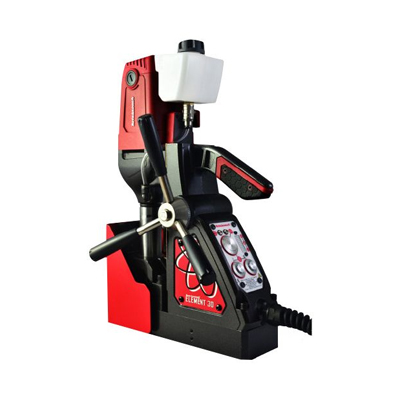
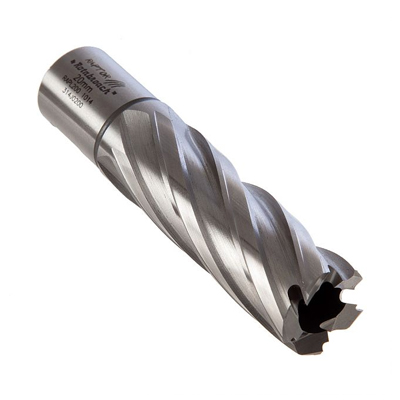
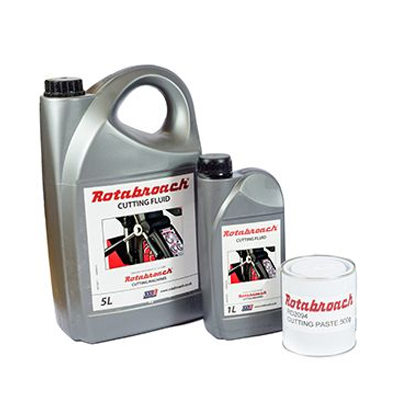
We have an Extensive Range of Rotabroach Products Including Magnetic Drills, Cutters & Accessories.


What's The Difference Between 110v & 240v?
In the UK and Europe, 240v is the general supply voltage, meaning that you can plug a 240v power tool directly into a power outlet and use it, without issue. So why do we have both 110v and 240v options for mag drills, chop saws and other machines in the UK? As a general rule, 110v tools are used in industry, such as construction sites, whilst 240v tools are used domestically, for DIY and home workshops. This is due to a number of different factors, including convenience, safety and others. Let’s look at the key differences:
When To Use A 110v Tool
Overall, 110v tools present a lower risk of harm than their 240v equivalent if the electrical wiring, or machine itself, is damaged during use. This is because the current flowing through the cable is half that of a 240v cable. The current must therefore be double the comparable 240v amount to achieve the same power.
As voltage and amperage (the measurement of current) are directly proportional, 110v wiring is considered safer to work with as its lower voltage carries less current than 240V which poses less risk of severe electrocution in cases of damage or misuse.
Considering this reduced risk of injury (and death), 110v tools are generally recommended for use in potentially hazardous environments, such as construction sites. In the Electricity at Work Regulations (1989). The Health and Safety Executive strongly recommends the use of 110v equipment in these environments due to the wet, dirty, dusty nature of construction sites, which often have a significant amount of personnel and machines active.
The scale of industrial projects, with large amounts of moving parts and potential for equipment and wiring damage, leads to serious risk to personnel. Therefore, the lower voltage equipment is suited to this environment as, in the case of an accident, it is far less likely to cause serious injury/death.
However, a 110v machine requires a transformer and industrial plug to work, stepping down the voltage from 240v outlet to the 110v equipment. Therefore, this enhanced safety comes at the cost of portability and convenience.
Overall, due to their lower potential for risk, 110v tools are more suitable for industrial applications as they present less danger to their operators and the people around them. As well as this, construction sites and similar environments are more likely to be able to accommodate transformers than a smaller DIY workshop.


When And Where To Use A 240v Tool
Despite the aforementioned guidance from the Health and Safety Executive, there is no specific legal ban on the use of 240v tools on construction sites and comparably sized projects. Some businesses incorporate their own regulations around their use, but this varies on a case-by-case basis. Overall, 240v tools are allowed for use on site and can be used in these potentially risky environments, though the general consensus is to use 110v equipment.
240v tools are appropriate for use in DIY and home applications for the opposite reasons to 110v; the risk of severe harm to the operator and those around them is significantly lower in a DIY or home-based project due to the environment, therefore the higher voltage is less of an issue. Cabling and components are far less likely to be damaged or otherwise made hazardous when not used in heavier industrial projects.
As well as this, 240v tools can be used without a transformer, meaning that the plug sockets in a house can power them. Most 240v tools will either come with a UK plug, or an adapter to be used with a UK plug socket. This convenience makes them ideal for use in DIY and domestic work, many contractors also use 240v tools to avoid having to use a transformer which can be inconvenient and takes up unnecessary space.
Recommended Products
A Selection of our Top Selling Rotabroach Products at Great Low Prices.